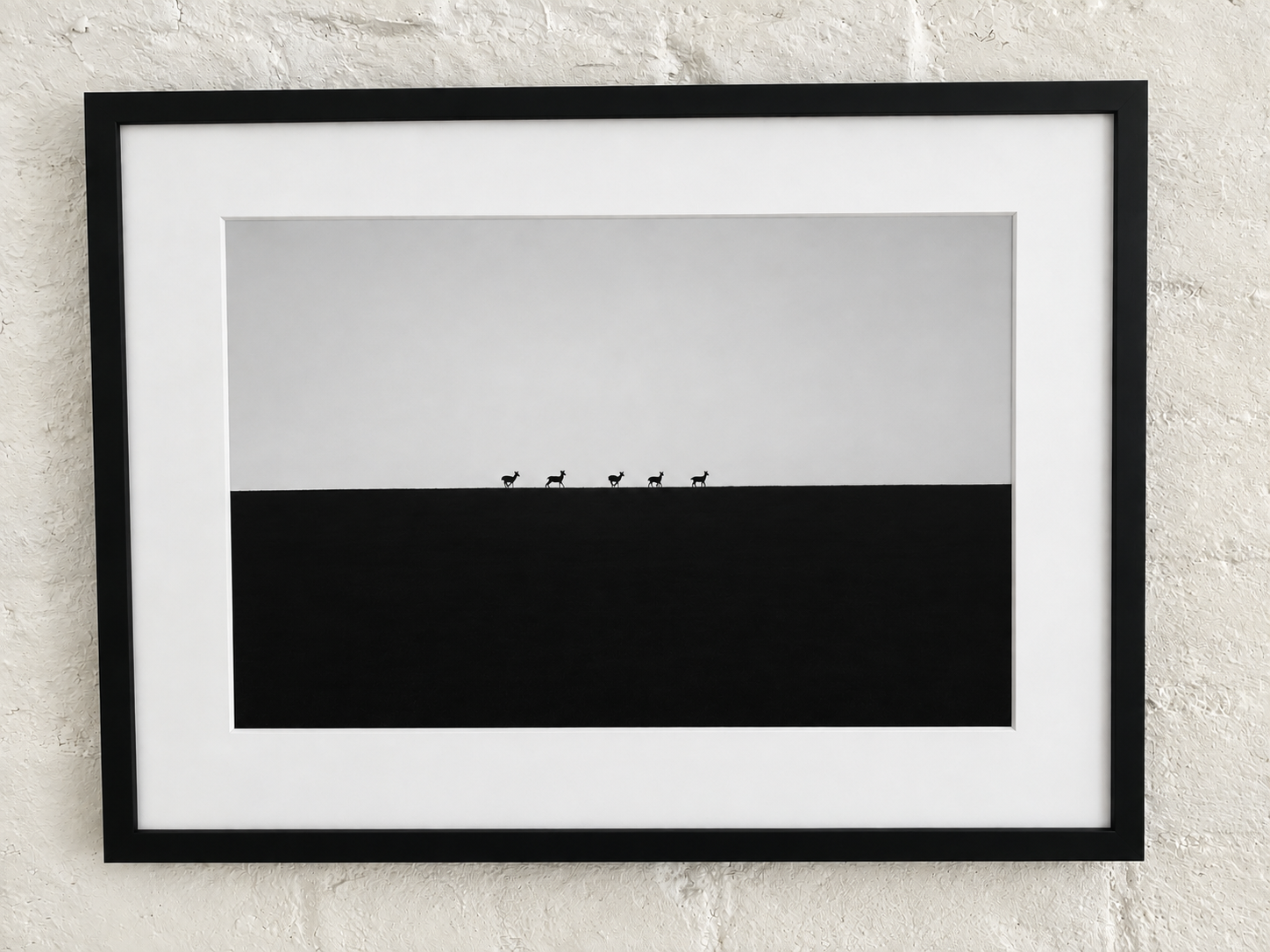
When it comes to buying art, whether it's photography, oil painting, charcoal or any other medium (for simplicity, I'll just refer to it as art throughout), I often hear the words investment or a good buy mentioned in the same breath.
Collecting art is another phrase we hear regularly. And that's great. If we're collecting art to hang in the lounge, bedroom, office or restaurant, then what's not to like? But are we collecting it to enjoy, or are we buying it to put away in a safe or storage facility, never to see the light of day again?
If it's the latter, what a great shame.
Imagine walking into a gallery, an open studio or even a second-hand shop and coming across a piece of art that catches your eye. What's your first thought? Is it, "I wonder if this will make me some money one day", or is it that it reminds you of somewhere you've visited, brings back a memory or simply lifts your spirits?
Hopefully, it's the latter.
After all, we don't generally buy furniture for our homes because we think it will appreciate in value. We might buy a particular chair because of its craftsmanship, its design or simply because we love sitting in it. It serves a purpose, but we also enjoy having it around us. Why should art be any different?

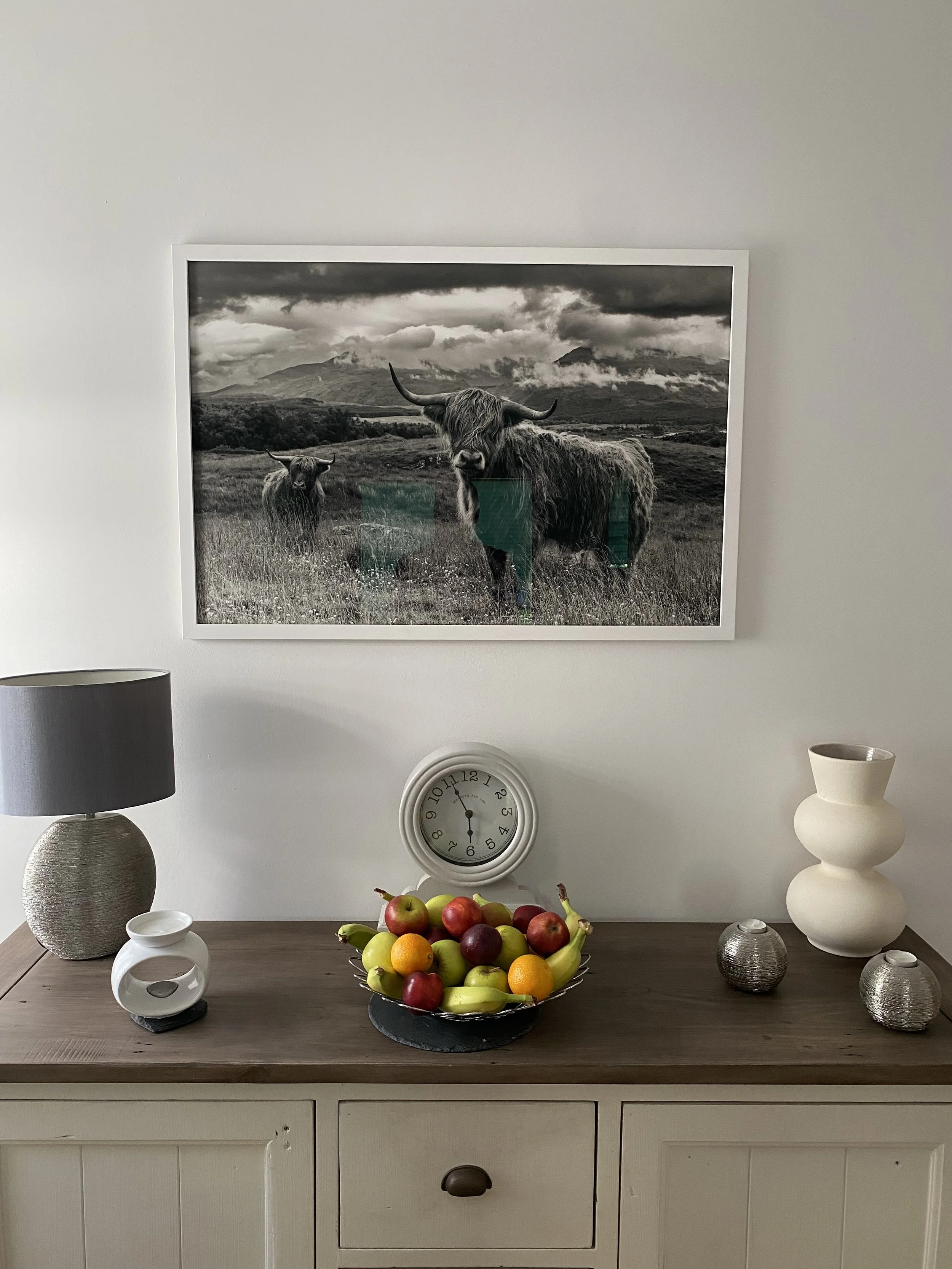
The King. Limited edition piezography print. Taken in the Scottish highlands.
Artists put an enormous amount of themselves into their work. Hours spent researching, travelling, experimenting, fine-tuning and sometimes simply waiting for the right moment. There's often a great deal of vulnerability involved, too. Creating something that is personal to you and then putting it out into the world for others to see takes a certain amount of courage.
Ultimately, artists want their work to be seen. They want it to find its way into the homes and spaces of people who appreciate it. To have someone connect with something they've created is a wonderful feeling. The thought that a piece might instead spend its life locked away somewhere, waiting for its value to increase, seems to miss much of the point.
For centuries, we've surrounded ourselves with meaningful objects, family heirlooms and things we simply find beautiful. They help make a house a home. They remind us of people, places and experiences, and sometimes they become part of our own story. Art has always played an important part in that.
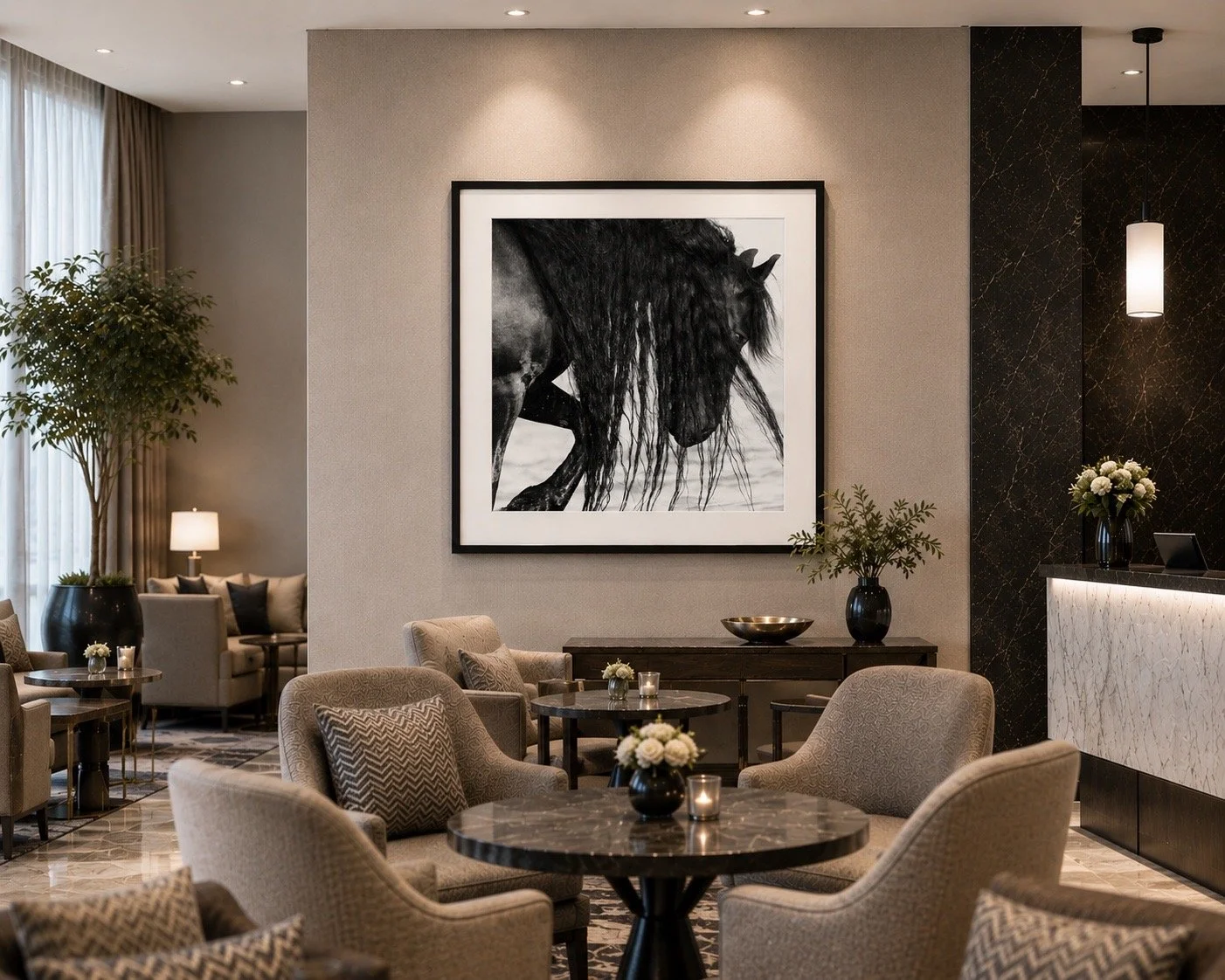
Different surroundings, yet artwork can still be enjoyed.
Of course, the way we choose art is changing. More and more, people are thinking about how a piece of artwork will work within their interior. Perhaps it has a hint of colour that complements the cushions and curtains. Maybe its minimalist style suits the room, or perhaps it's a bold, powerful piece above a desk that reflects someone's personality or gives them a little confidence at the start of the working day.
All of these are perfectly good reasons to buy art.
But I would argue that the best purchases often go a little further than simply matching the room.
You might find yourself looking at a photograph every morning because it reminds you of a place you love. Perhaps a particular painting makes you feel calm, or a piece of sculpture makes you smile every time you walk past it. You might not even be able to explain exactly why you like something. You just know that you do.
And isn't that enough?
I create my fine art photography as though it were going to hang in my own home. I have to make something that I personally connect with first. I need to be happy with the composition, the balance, the print and the way the image makes me feel. If it resonates with someone else, then that's fantastic. But I can't start by trying to second-guess what might sell or what someone might consider a good investment.
As a living artist, I don't believe I should be creating work for the investment market, hoping that its value will appreciate over time. Of course, there are established artists whose paintings and photographs command considerably more money as their reputations grow. There will always be a small proportion of artists whose work becomes highly sought after.
But that's a very small part of the art world, and certainly not something I would ever suggest someone should rely upon when buying one of my limited edition prints.
I'd much rather someone bought one of my fine art photography prints because they loved looking at it. Because it meant something to them, reminded them of somewhere special or simply made them stop and take a second look.
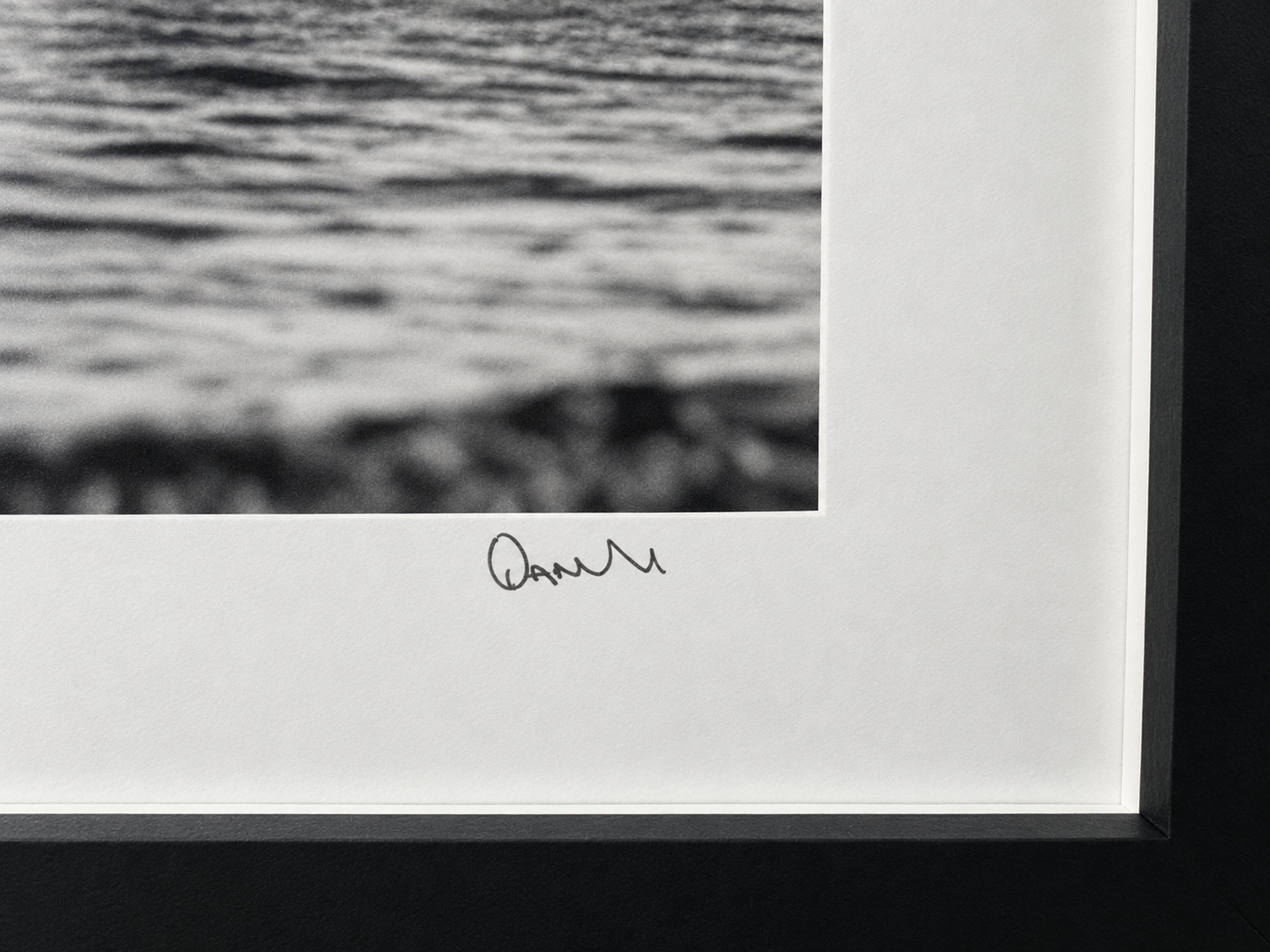
Hand signed print
If its financial value increases over the years, that's a wonderful bonus. But surely the real return is the pleasure it gives you every time you see it.
So perhaps the next time you're considering buying a piece of art for your home, forget about whether it's a good investment for a moment. Forget about what someone else might think of it, or whether it will be worth more in twenty years.
Instead, ask yourself a much simpler question:
Would my life be richer for seeing this on my wall every single day?
If the answer is yes, perhaps that's all the investment you need.